Concrete Foundations & Footings
Strong foundations that support your structures for generations.
The Importance of Solid Foundations
Your foundation is literally what everything else sits on. A properly built concrete foundation supports the weight of your structure, resists settling and movement, and keeps your building level and stable for decades. Poor foundation work leads to cracked walls, stuck doors, uneven floors, and expensive structural repairs down the road.
Here in Westminster, CA, we build concrete foundations for home additions, detached garages, workshops, covered patios, outdoor kitchens, and other structures. Each project requires specific engineering to handle the load, soil conditions, and local building codes. We work with engineers when needed and ensure all work meets or exceeds code requirements.
Footings are the wider concrete bases that foundations sit on. They spread the weight over a larger area to prevent sinking. Proper footing depth and width are critical, especially in areas with expansive soil or high water tables. We design and install footings that keep your foundation stable through all conditions.
Get Foundation QuoteFoundation Types We Install
Different structures need different foundation approaches. We specialize in several foundation types for residential and commercial projects:
- Slab on Grade Foundations: A single thick concrete slab that serves as both foundation and floor. This works well for garages, workshops, and single-story structures. It is cost-effective and suitable for areas with stable soil and minimal frost depth.
- Stem Wall Foundations: Concrete footings with vertical walls that elevate the structure above grade. Wood framing sits on top of the stem walls. This is common for home additions and provides better drainage and termite protection than slab foundations.
- Post and Beam Foundations: Individual concrete footings that support posts or piers. This works for decks, covered patios, and structures on sloped sites. It requires less concrete than full perimeter foundations but still provides solid support.
- Continuous Footings: Long trenches filled with reinforced concrete that run under load-bearing walls. These spread weight evenly and prevent differential settling. Essential for any structure with walls that carry significant loads.
- Grade Beams: Reinforced concrete beams that tie individual footings together. They distribute loads and add structural strength. Required for some soil conditions and larger structures.
We recommend the right foundation type based on your structure, soil conditions, budget, and building codes. During the planning phase, we explain the pros and cons of each approach so you can make an informed decision.
Discuss Foundation OptionsOur Foundation Construction Process
Foundation work requires precision and attention to detail. Here is how we approach each project:
Engineering and Permits
We start with proper engineering to determine footing size, depth, and reinforcement requirements. We obtain necessary permits and schedule inspections. This ensures your foundation meets all structural and legal requirements.
Excavation and Trenching
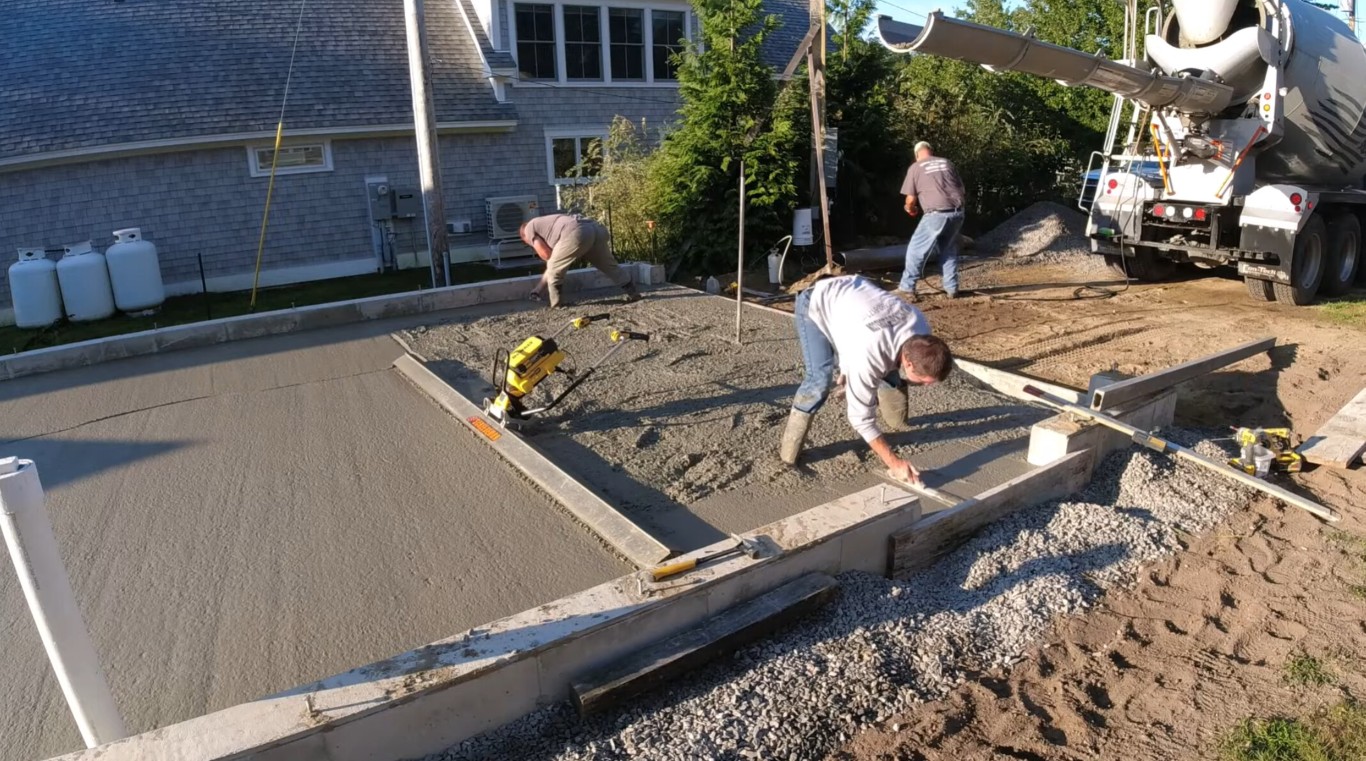
We excavate to the depth specified by engineering plans, typically below frost line and into stable soil. The bottom of the excavation gets leveled and compacted. Any soft spots or unsuitable soil gets removed and replaced with compacted fill.
Forming and Reinforcement
We build forms to exact dimensions and install rebar per engineering specifications. Proper placement and tying of reinforcing steel is critical for structural integrity. We also install anchor bolts or hold-downs for attaching framing to the foundation.
Pouring and Inspection
We pour concrete in a continuous operation to avoid cold joints. The concrete gets vibrated to remove air pockets and ensure complete filling around reinforcement. After the pour, a building inspector verifies the work before we proceed. Check out our concrete slab services for related projects or visit our homepage for all services.
Start Your Foundation Project